One Mistake That Can Shorten the Life of Your Manicure
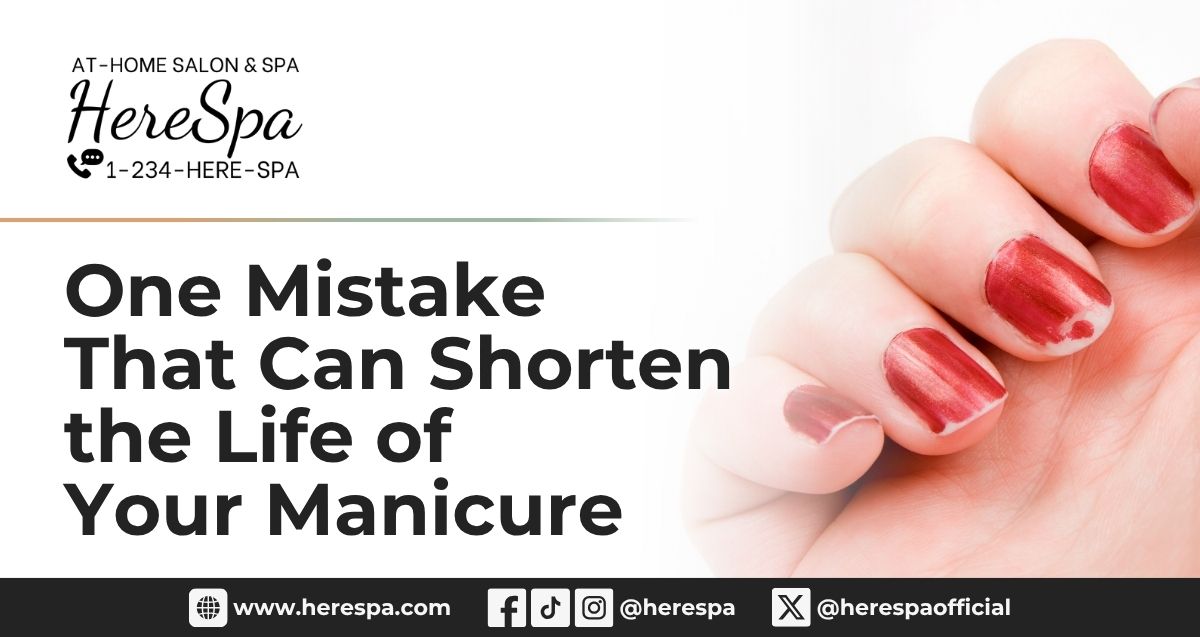
You just left your manicure appointment with fresh nails, a color you love, and that satisfying feeling of having your life slightly more together.
Then a few days later, you notice it.
A tiny chip.
Maybe you pick at it. Maybe you use your fingernail to open a package. Maybe you start peeling at the edge because the polish is already lifting. Before you know it, the manicure you were hoping would last for weeks is looking a little worse for wear.
Your manicure does not necessarily need to be complicated to maintain. Sometimes, it comes down to a few small habits you may not even realize are working against you.
Curious as to how to make your manicure last longer? Here are some manicure mistakes that could ruin your nails, and some nail care tips to have a long-lasting manicure.
Stop Using Your Nails as Tools
This is one of the easiest manicure mistakes everyone overlooks.
Your nails might seem convenient when you need to open a package, scrape off a sticker, pop open a container, or pick at something that is stuck. But using your nails this way can put unnecessary stress on them and contribute to chipping, splitting, or lifting.
The American Academy of Dermatology recommends avoiding the use of fingernails as tools because doing so can damage the nails.
The same rule applies after a manicure. Your nails may look strong, but they are still not replacements for scissors, tweezers, or a bottle opener.
If something needs to be opened, grab the appropriate tool. Your manicure will thank you.
Another Habit That Can Ruin Your Manicure: Picking at It
You notice a tiny piece of polish lifting.
Your first instinct might be to pull it.
Don't.
Picking or peeling at nail polish can remove more than just the color. With gel manicures especially, the American Academy of Dermatology recommends not picking at the polish when it begins to come off. Instead, have it properly removed by a nail professional.
That little piece of lifting polish can also become a temptation. Once you start picking, it can be surprisingly difficult to stop.
If you notice your manicure starting to lift, resist the urge to turn it into a DIY removal session. One of our manicure tips is to schedule a proper removal or check with your nail technician about what to do next.
Be Careful With Water and Harsh Products
Your hands go through a lot during the day.
You wash them, clean things, shower, cook, work, and handle products that can be drying. Frequent exposure to water and harsh chemicals can also contribute to brittle nails. The American Academy of Dermatology recommends moisturizing nails and protecting your hands when working with harsh chemicals.
That does not mean you need to avoid water altogether. It simply means your hands deserve some extra care to get that long-lasting manicure.
When cleaning with household chemicals, consider wearing gloves. After washing your hands, apply hand cream or moisturizer to help keep your skin and nails hydrated.
Your manicure is an accessory, but your natural nails underneath it still need attention.
Don't Skip Nail Care Between Appointments
A manicure appointment is only one part of your nail care routine.
What you do between appointments can make a difference in how your nails look and feel. Keeping your hands moisturized, avoiding unnecessary picking, and treating your nails gently can help you maintain them between visits.
Cuticles deserve attention, too. They serve as a protective barrier around the nail, and dermatologists generally recommend leaving them alone rather than aggressively cutting or pushing them back.
If your cuticles feel dry, moisturizing them can be a simple way to add some care to your routine.
What About Before Your Manicure?
There is also a temptation to do a little too much before an appointment.
You may think you need to trim, cut, push back your cuticles, or aggressively clean up your nails before seeing your nail technician. You don't necessarily need to do all of that yourself.
Your nail technician can assess your nails and prepare them for the service. More importantly, aggressive cuticle cutting or pushing can damage the protective skin around the nail and increase the risk of infection.
If you want to prepare for your appointment, keep it simple. Arrive with clean hands and nails, and let your nail professional handle the preparation.
Give Your Nails a Break When They Need One
If you regularly wear gel, acrylic, or other long-lasting nail enhancements, pay attention to the condition of your natural nails.
The American Academy of Dermatology notes that gel manicures can contribute to brittleness, peeling, and cracking, particularly with repeated use. Dermatologists recommend taking breaks from polish when needed and moisturizing the nails and cuticles between manicures.
One of our nail care tips: if your nails become unusually thin, brittle, discolored, painful, or otherwise change in appearance, consider giving them a break and talking with a dermatologist rather than simply covering the problem with another manicure.
Healthy nails should always come before having perfectly polished nails.
How to Make Your Manicure Last Longer
You do not need a complicated routine to take better care of your manicure. A few simple habits can go a long way. Here are some manicure tips:
- Use your nails for nail-related tasks, not as tools.
- Don't pick or peel your polish when it starts lifting.
- Wear gloves when working with harsh cleaning products.
- Moisturize your hands and cuticles regularly.
- Avoid aggressively cutting or pushing back your cuticles.
- Follow your nail technician's recommendations for removal and maintenance.
- Give your natural nails a break when they need one.
And perhaps the biggest one: stop picking at that tiny chip.
We know. Easier said than done.
Your Manicure Deserves a Little Aftercare
Getting a manicure is a simple way to take some time for yourself, but the appointment does not have to be the only part of the experience you enjoy.
Taking care of your nails between appointments can help you get more out of your manicure while keeping your natural nails in good shape. Small manicure aftercare habits, like reaching for a tool instead of your fingernails or moisturizing your hands before bed, can become part of your everyday routine.
When you're ready for your next manicure, let the professionals at HereSpa handle the manicure aftercare.
Explore available nail care services at HereSpa.com and bring a little more self-care into your routine, right from the comfort of home.